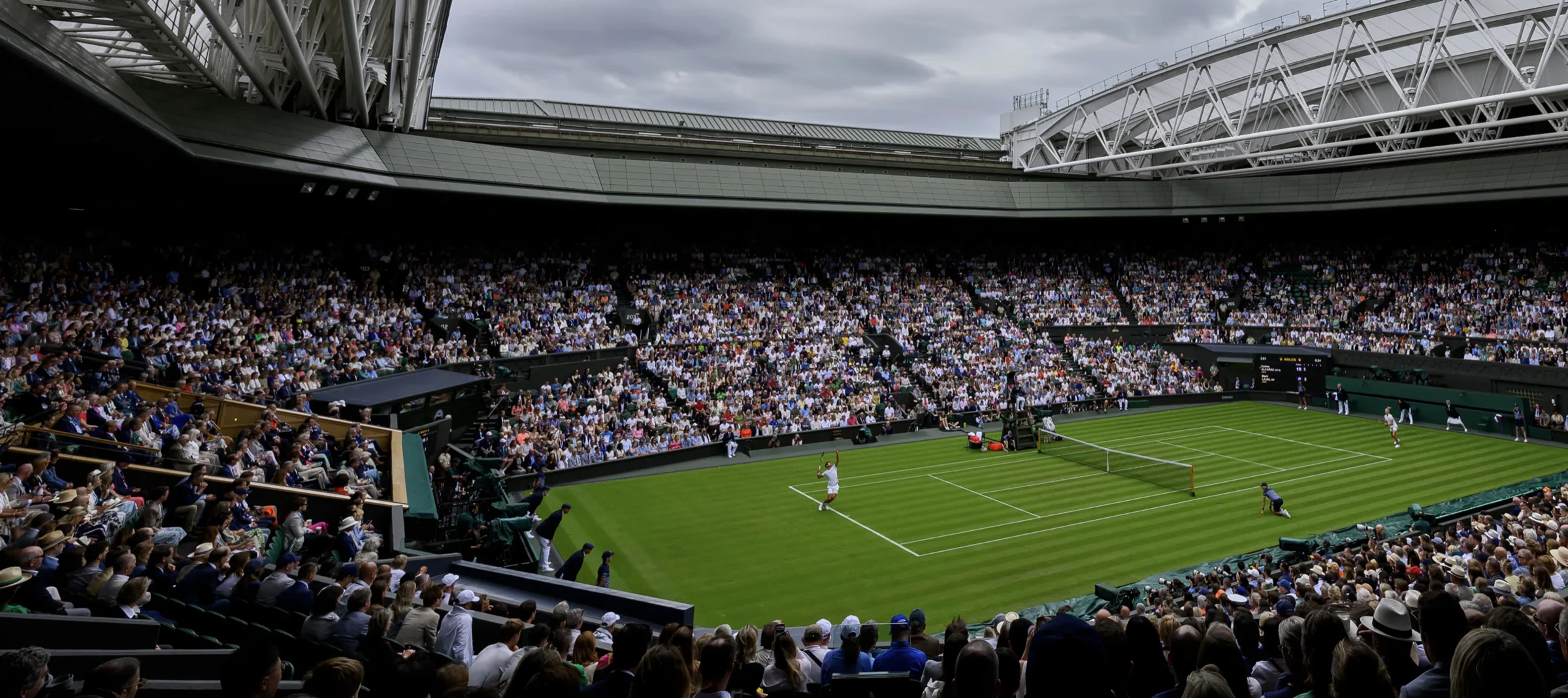
For nearly a century, this association was the gold standard. Founded in 1927. Thousands of certified teaching professionals. The largest body of its kind in the world. And a name rooted in a single sport, at a moment when that sport was no longer the center of the category.
The Shift Nobody Could Ignore
New racquet sports were exploding. The membership was changing shape faster than the brand could keep up. Specialists who had spent their careers in a single discipline were now teaching across three, four, five. Prospective members working in emerging sports looked at the name, assumed it was not for them, and chose to affiliate with nothing.
The old name was not wrong. It was incomplete. And in the current discovery landscape, an incomplete name is a closed door.
The leadership made a decision most legacy organizations never have the courage to make. After 97 years, they decided to reinvent the identity entirely. Five sports. One home. A name that described the future of the profession, not the past of the category.
"We were not just changing a name. We were asking more than 14,000 members to trust us with something personal. Their professional identity. We had to earn that trust all over again, and we had to do it fast."
The Four Cliffs of a Legacy Rebrand
Rebrands fail for predictable reasons. When they fail publicly, they take years of reputation down with them. This engagement required solving four distinct failure modes in parallel, each capable of killing the transition on its own.
The diagnosis
What Had to Work Simultaneously
The Legacy Paradox
The old name carried a century of search authority, institutional credibility, and member loyalty. Abandoning it meant starting from zero in Google, ChatGPT, and every other discovery surface. The new brand, in the eyes of the internet, did not exist.
The Member Migration
More than 14,000 active members had to transition without confusion. Any broken portal, any failed login, any unclear communication could erode the trust that had taken generations to build.
The Expanded Mission
The scope was expanding from one sport to five. The new brand had to credibly claim authority in categories the old brand had never occupied, while honoring the heritage that made the expansion possible.
The Technical Cliff
Certification records, member portals, institutional content, and legacy search traffic had to transfer without a single broken link or lost ranking. One technical misstep could mean years of recovery.
Four failure modes. One engagement. Each required its own architectural solution.
Three Phases. One System.
The work was structured as three phases running on overlapping timelines. The brand, the technology, and the discovery layer were treated as a single system, not three separate projects. Every decision in one phase reinforced the others.
Phase 1: Defining the Identity with Cognitive Engineers
Before a single pixel was designed, a dedicated set of SynthesisArc Cognitive Engineers was deployed into the strategy workstream. These CEs were scoped for brand positioning, member-segment analysis, competitive intelligence, and category framing. They worked alongside the leadership, not in place of them, to answer the question most rebrands skip: who do you want to become?
The answer was clear. They did not want to be a single-sport organization that happened to cover other disciplines. They wanted to be the definitive home for all racquet sports professionals. Certification, education, and career development across every discipline, under one institutional roof. That vision became the blueprint for every downstream decision.
Our strategy CEs then mapped the emotional landscape of the membership in structured detail. The fears: losing identity, losing community. The aspirations: broader career opportunities, unified professional recognition. The unspoken need: to feel like the future was being built for them, not happening to them. Every communication, every feature, every tone choice was engineered against that emotional map.
Phase 2: Building the Digital Foundation
The new digital home was engineered as a high-performance ecosystem, not as a website. Every page hit Google's Core Web Vitals thresholds from day one. Full HTTPS coverage across every URL. Structured data, breadcrumbs, and FAQ schema embedded site-wide, giving both traditional search engines and AI crawlers a clean, trustworthy map of the entire system.
Technical excellence is invisible to users and unmissable to the crawlers that decide what surfaces. The foundation had to earn trust on the first visit, because there were no second chances to make the new brand's initial impression in Google's index or in any major LLM's retrieval layer.
Phase 3: Precognition, QSO, and Campaign Cognitive Engineers
A beautiful website nobody can find is a monument to wasted potential. With the brand defined and the foundation built, we deployed Precognition and the Quantum Search Optimization (QSO) framework to solve the hardest problem: making a brand nobody had heard of visible in a world that was not looking for it.
A second set of Cognitive Engineers was assigned to this phase, this time scoped for campaign architecture. These campaign CEs ran continuous query analysis, generated and refined search-intent content briefs, monitored ranking movements daily, and tuned outbound announcement sequences to member segments by career stage and sport discipline. The CEs did not replace the marketing team. They compressed the loop between insight and action from weeks to hours.
The QSO framework is engineered for the modern discovery ecosystem, not for a single search engine. Google is no longer the only front door. Millions of decision-makers now turn to ChatGPT, Perplexity, Claude, and Gemini to discover organizations, answer questions, and shortlist vendors. A brand visible only in Google in 2026 is already behind.
On the traditional search front, we engineered a complete authority transfer. Nearly a century of accumulated search equity was systematically captured from the old brand and channeled into the new identity. On the AI-mediated discovery front, we structured the site's content, authority signals, and semantic architecture so that when someone asks an AI assistant about professional certification in this industry, the association does not just appear in the answer. It is the answer.
The QSO architecture
Six layers of engineered discoverability.
01
Legacy Authority Transfer
02
Core Web Vitals Foundation
03
Semantic Entity Architecture
04
Schema and Structured Data
05
AI Platform Source Optimization
06
Category Expansion Indexing
The discovery layer is no longer a single surface. It is an ecosystem. QSO is engineered for the full ecosystem from day one.
Five Months Later: The Numbers
In the digital world, the truth is told by data. The data told a story that exceeded every projection on the engagement plan.
The site crossed 100 organic clicks in its first 10 weeks. By week 14, it had crossed 1,000. By month five, it had surpassed 5,000 weekly clicks and was still accelerating. The leadership had budgeted for a slow, painful transition of up to a year. Within weeks, they were months ahead of plan.
500x+
Search Traffic Growth
24,000%
New Brand Search Growth
8,000%
Legacy Search Capture
#1
New Brand Name Ranking
10,900
Clicks, First 3 Months
15.3%
Average CTR
1,000+
New Ranked Queries
100%
Perfect Core Web Vitals
The CTR number is the one that matters
A 15.3% average click-through rate is not a typical outcome. The industry benchmark for organic search CTR sits between 3% and 5%. A result of 15.3% means that when the site appears in a search result, it is the one being clicked at roughly four times the expected rate. That is not a volume story. That is a relevance story. The right audience is finding the right answer at the right moment, repeatedly.
"We were prepared for a slow, painful transition. We expected it to take a year before the new brand gained real traction. Instead, we were months ahead of projections within weeks. SynthesisArc did not just build us a website. They built us a future."
Verified Presence in AI Search
The discovery ecosystem has changed faster than most organizations have acknowledged. Millions of professionals now default to AI assistants for category research, vendor shortlists, and certification questions. An organization invisible in ChatGPT, Perplexity, and Claude is not just missing a channel. It is missing the channel the next generation of its prospective members is using first.
Verified AI platform discoverability was a first-class deliverable on this engagement, not an afterthought. Post-launch testing confirms the new brand surfaces as a recognized, authoritative source when queried across major LLM platforms for professional certification and career development in its expanded category. Most peer organizations in the industry have not yet begun to architect for this layer. The gap is widening.
What Worked
- Brand, technology, and discovery treated as one unified system
- Strategy Cognitive Engineers defined identity before any pixel was designed
- Campaign CEs compressed the insight-to-action loop from weeks to hours
- Perfect Core Web Vitals on day one earned crawler trust immediately
- Legacy authority systematically transferred, not discarded
- AI discoverability architected as deliverable, not accident
Key Insights
- A rebrand is a rebirth, not a redesign
- The emotional migration of members decides success, not the technical one
- Technical excellence is invisible to users and essential to discovery
- Legacy authority is an asset to transfer, not a memory to mourn
- The best rebrands unlock futures the old identity could not reach
- Any digital strategy that ignores AI-mediated discovery is already obsolete
A Legacy, Reimagined
The association is not surviving its reinvention. It is thriving because of it. The new identity has become the magnet it was designed to be, pulling in professionals from disciplines that never had an institutional home. Certification interest is climbing across all five sports. Membership inquiries in emerging categories are arriving from markets the old brand could not have reached. The digital presence that did not exist six months ago is now the category's definitive destination, whether a prospective member finds it through Google, ChatGPT, or any other platform.
The association has since engaged SynthesisArc for the next phase of its evolution: the development of advanced AI systems to further enhance member experience and operational capability. The work continues.
Nearly a century of heritage. Five months to dominance. One architectural decision to treat the rebrand as a rebirth.
Anonymized based on a real SynthesisArc engagement. Client name and identifying details have been removed or altered at client request. Performance metrics are reproduced from engagement dashboards. Individual outcomes vary based on market conditions, competition, and implementation factors.