What does a hybrid AI architecture look like in practice?
The answer
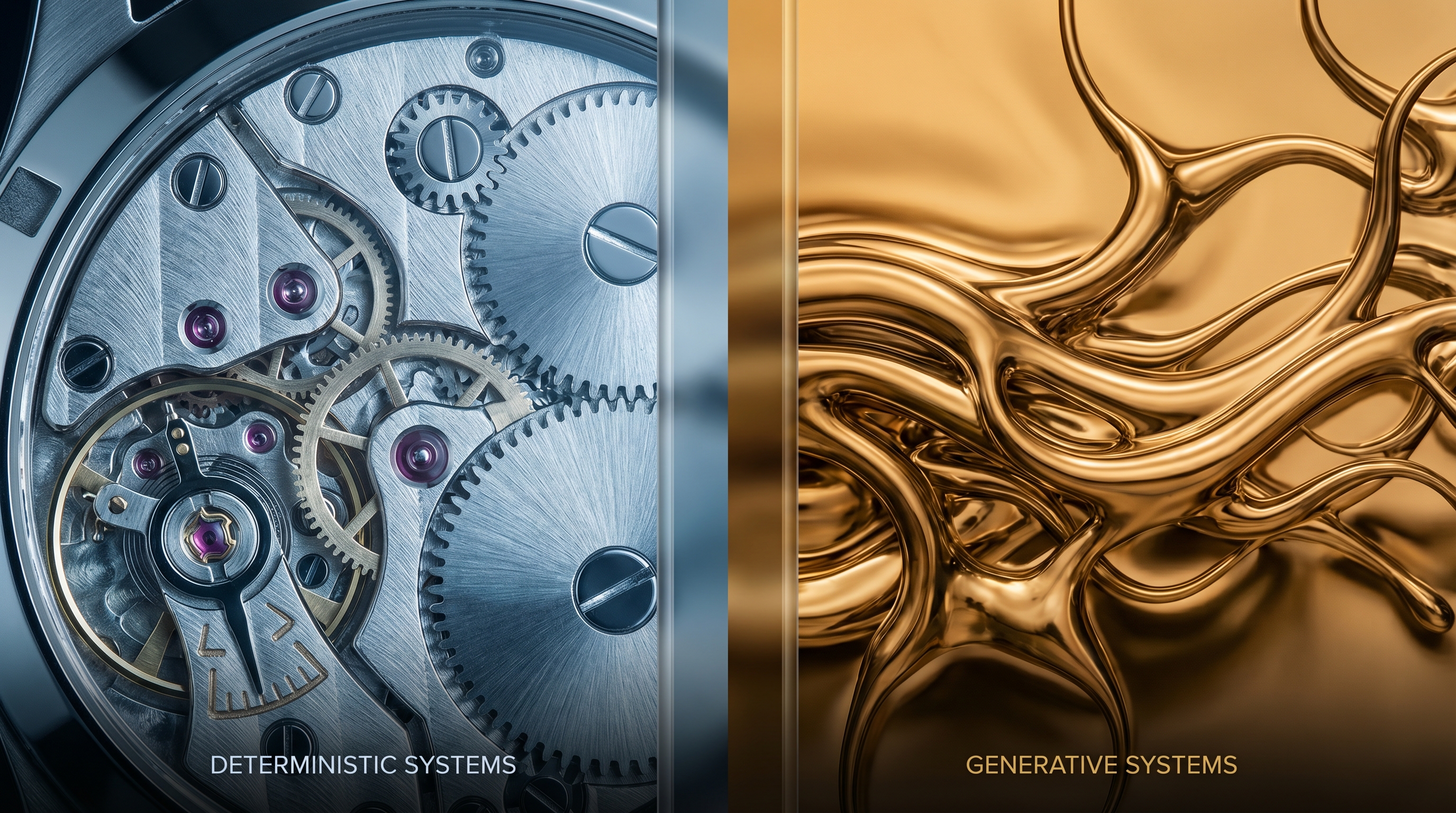
A hybrid AI architecture uses generative AI where flexibility matters (reading messy input, drafting responses, handling edge cases) and deterministic AI where reliability matters (making decisions, checking compliance, logging the audit trail). Think of it as a relay team: the generative model runs the creative legs, the deterministic system runs the legs where accuracy is non-negotiable, and governance watches the entire race.
Source: SynthesisArc, 2026
The full picture
In practice, a hybrid architecture works like this: a customer submits a complaint in free text. The generative layer reads the unstructured message and extracts key data: what happened, which product, what the customer wants. Then the deterministic layer kicks in: it applies your business rules, checks the policy, calculates the appropriate response, and produces a decision. The generative layer drafts a customer-facing reply in the right tone. The deterministic layer validates the reply against compliance rules before sending.
The customer gets a fast, accurate, human-sounding response. Your compliance team gets a full audit trail. Your operations team gets 80% automation on a workflow that used to require a human at every step. That is the hybrid advantage.
The mistake most companies make is choosing one or the other. All deterministic and your system breaks on any input it has not seen before. All generative and your decisions are inconsistent, unexplainable, and impossible to audit. Hybrid gives you both strengths with neither weakness.
PRISM was designed as a hybrid architecture from day one. The deterministic engine handles rule processing and audit logging. The generative layer handles communication and edge-case reasoning. Claude Guard governs both layers. This is why PRISM deployments pass regulatory reviews that purely generative deployments fail.
Key terminology
Apply this thinking
The SynthesisArc products that put this into production.
Go deeper
Field Notes on this topic.
Ready to put this into production?